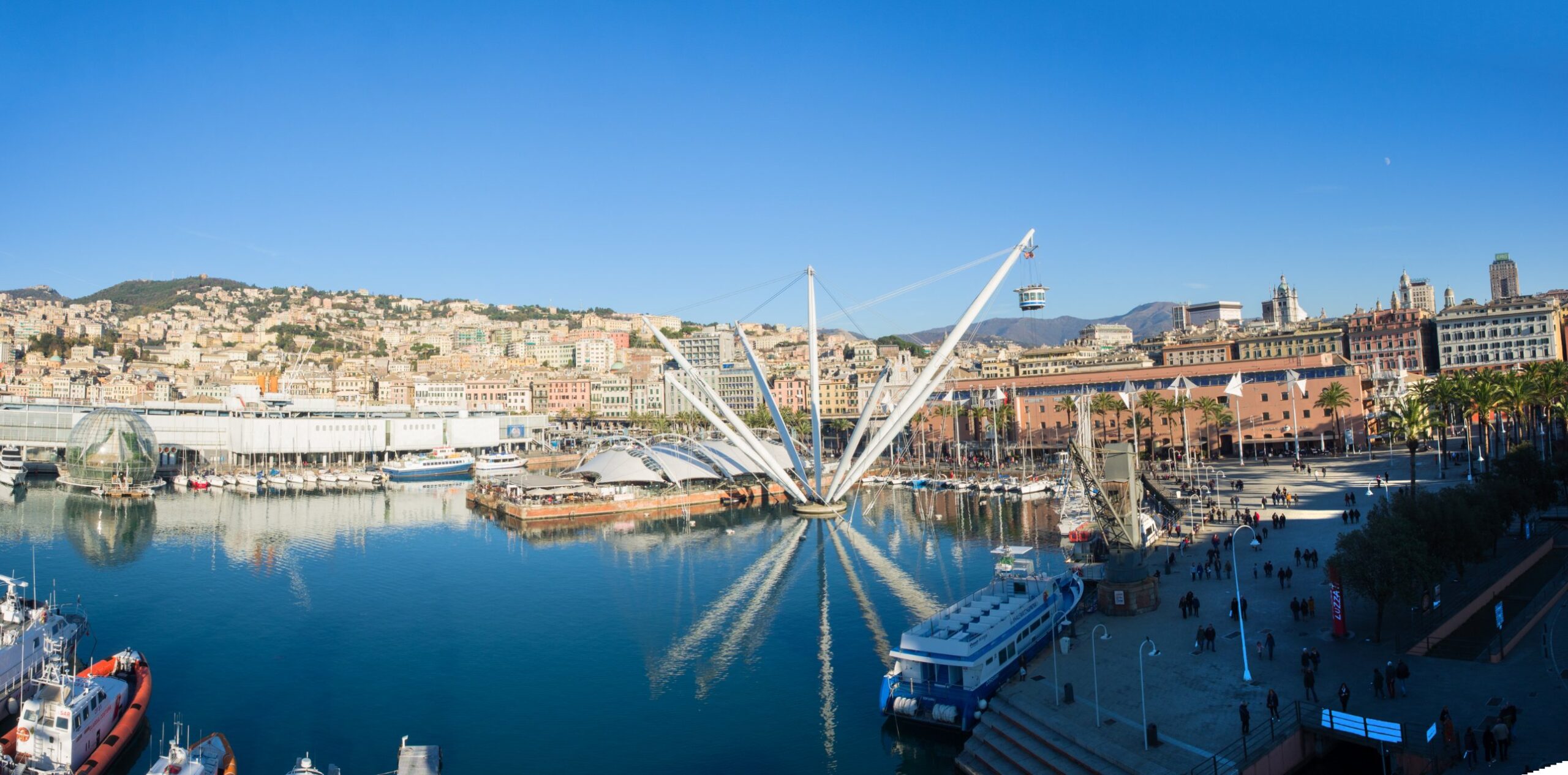
In Genoa, food and history are the same story. The city lived from the sea, from trade and from a narrow strip of land between the mountains and the water. Every traditional dish carries a trace of that life: of sailors who needed food that would last, of merchants who brought ingredients from distant ports, of families who wasted nothing.
Here are six Genoese dishes and the history behind them.
1. Farinata: born after a sea battle (so they say)
Farinata is a thin, golden pancake of chickpea flour, water, olive oil and salt, baked in large copper pans in a very hot oven. In Genoa you eat it in the sciamadde, the old wood-oven shops of the historic centre.
Its origin story goes back to 1284 and the Battle of Meloria, when Genoa defeated Pisa at sea. According to legend, on the way home a storm hit the Genoese ships: barrels of oil and sacks of chickpeas spilled and mixed with seawater. The sailors saved what they could, left the mixture to dry in the sun and, hungry, ate it, discovering it was delicious.
It is a legend, of course, but it says something true: Genoese cooking was born on ships, from simple ingredients and necessity.
2. Pesto: a mortar, a trading city and a Dutch cheese
Pesto takes its name from the Genoese word pestâ, to pound or crush, because it is made in a marble mortar with a wooden pestle. In the Middle Ages Genoese cooks already made agliata, a paste of garlic and walnuts, and garlic was a staple for Ligurian sailors.
Basil arrived later: it is documented in pesto only from the 1850s. In 1863, Giovanni Battista Ratto’s cookbook La Cuciniera Genovese gave one of the first recipes: garlic, basil, grated cheese, pine nuts, a little butter and oil. The cheese he suggested was Dutch, a small detail that shows how Genoa’s trade with Northern Europe reached right into the kitchen.
Today pesto is so loved that the city even hosts a World Pesto Championship. In our pesto and trofie class you make it the traditional way, in the mortar.
3. Stockfish: a taste of Norway in the Mediterranean
It may be surprising that one of the most traditional dishes of a Mediterranean port is made with fish from the North Sea. Stockfish (stoccafisso) is cod air-dried in Norway, and Genoa has imported it since at least the 15th century.
The reason is practical. Fresh fish was hard to find in winter and impossible to keep on long voyages, while stockfish could be stored for months. In Genoa it became stoccafisso accomodato, a slow-cooked stew with potatoes, tomatoes, olives, pine nuts and capers. Stockfish and salt cod travelled to other Italian cities too; in our class you can cook cod fish Vicentina style, a related tradition from the Veneto.
4. Cappon magro: a “lean” feast for fasting days
Cappon magro is the most spectacular dish of Genoese cuisine: a pyramid of fish, lobster and vegetables built on a base of ship’s biscuits (gallette) rubbed with garlic and soaked in seawater and vinegar, all covered with a green sauce of parsley, capers, anchovies and olives.
The name means “lean capon”: it contains no meat, so it was suitable for the fasting days of the Catholic calendar, and it is traditionally served on Christmas Eve. The hard biscuits at its base are a reminder of the sailors’ diet. Genoese people like to say that this dish turned the humble food of the sea into a banquet worthy of the palaces.
5. Pandolce: a Christmas cake for long voyages
Pandolce is Genoa’s Christmas cake, rich with raisins, pine nuts, candied fruit and fennel seeds. According to legend, in the 16th century Admiral Andrea Doria, the man who led the Republic into its golden century, organised a competition among Genoese pastry cooks. He wanted a cake that represented the city, was nourishing, lasted for months at sea and eased the sailors’ homesickness.
The Christmas rituals are still alive in many families: the youngest person places a sprig of laurel or olive on the cake, the oldest cuts the first slice, and one piece is saved for a poor person who knocks at the door, another for the feast of San Biagio, protector of the throat, in February.
6. Focaccia: the city’s everyday bread
Focaccia, fugassa in Genoese, is the city’s daily bread: soft, oily, salty, with the typical finger dimples. It is eaten at any time of the day, and many Genoese still dip it in their cappuccino at breakfast, a habit that surprises every visitor.
It is the food of people on the move: dockworkers, students, office workers, fishermen. Just outside the city, in Recco, you find its famous cousin, focaccia with cheese, two paper-thin layers of dough filled with fresh creamy cheese.
A cuisine shaped by the sea and by thrift
Look at these dishes together and you can read the history of Genoa: food that survives a sea voyage (stockfish, pandolce, ship’s biscuits), ingredients that arrived through the port (Dutch cheese, Norwegian fish), and a creative thrift born from little land and a lot of hard work. Herbs from small hillside gardens, chickpeas, olive oil and bread became some of the most loved recipes in Italy.
If you want to discover more about the city behind the food, read our short history of Genoa “La Superba” and the surprising story of how blue jeans were born in Genoa.
Cook the story yourself
The best way to understand Genoese food is to make it. In our hands-on class in the heart of Genoa you choose three recipes, cook them with us and then sit down to eat what you made. Genoese favourites include pesto and trofie and lasagna with pesto.