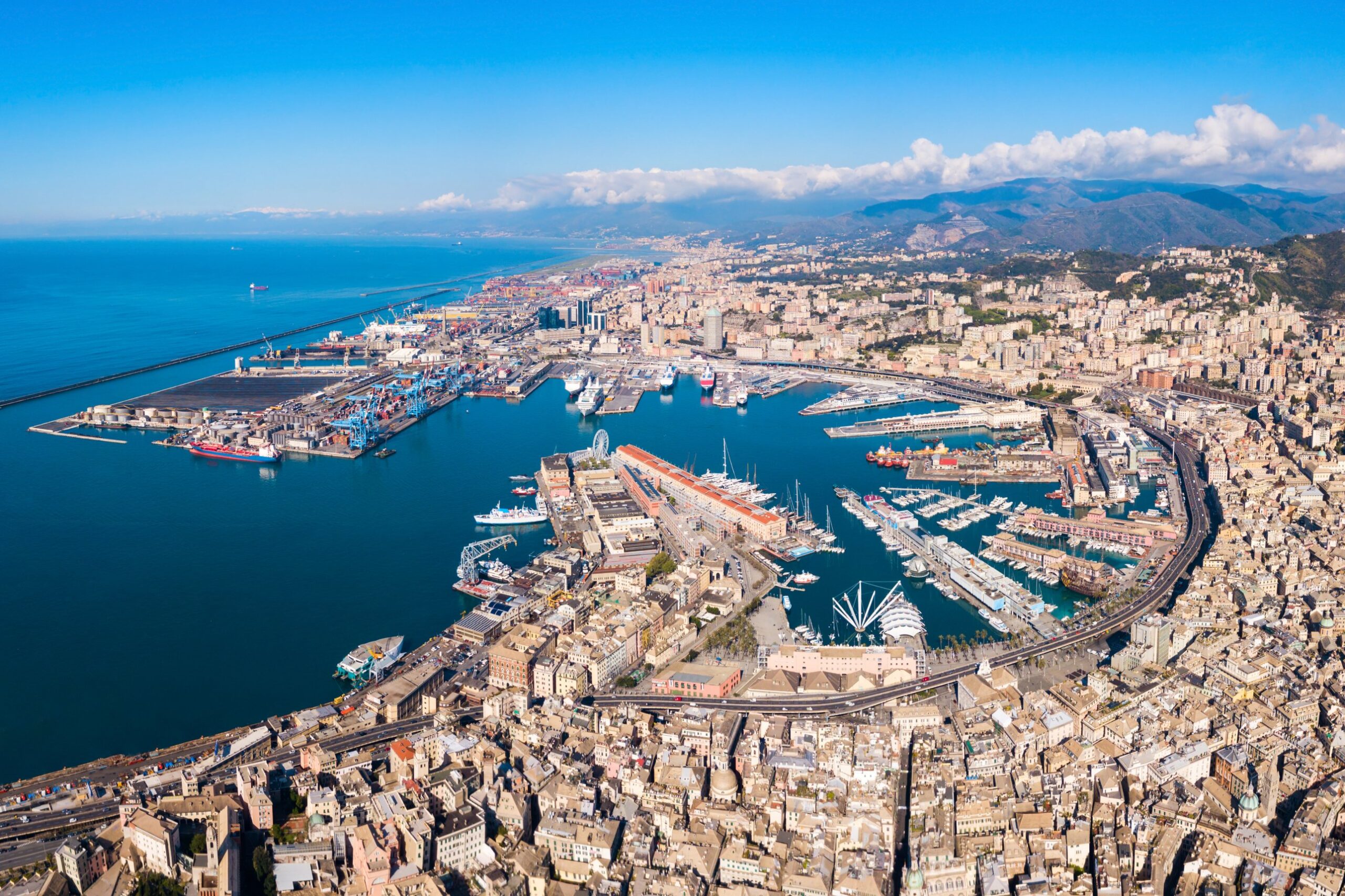
Walk out of our kitchen in Via Pisacane, down towards the old port, and you are walking through almost a thousand years of history. Genoa does not show off at first sight: its treasures hide in narrow alleys, behind heavy doors and inside palaces that look plain from the street. But once you know its story, every corner starts to speak.
Here is a short history of Genoa for travellers who want to understand the city they are visiting.
Why Genoa is called “La Superba”
The nickname comes from the poet Petrarch, who called Genoa superba, “proud” or “magnificent”, impressed by its power and its monuments. Genoese people still use the name with a smile: the city is proud, a little reserved, and very aware of its past.
A republic born from the sea
Genoa became a self-governing commune in the 11th century, and the Republic of Genoa is traditionally dated from 1099. With mountains behind it and very little farmland, the city had only one real road to wealth: the sea.
Genoese ships traded across the Mediterranean and beyond. The Republic built a network of trading colonies that reached as far as Caffa in Crimea, on the Black Sea, where Genoese settlements survived from the 13th century until 1475. The island of Chios in the Aegean was under Genoese control for three centuries, and Corsica was ruled by Genoa until 1768.
Rivals at sea: Pisa and Venice
Power at sea meant rivals. In 1284, at the Battle of Meloria, the Genoese fleet defeated Pisa, taking control of trade in the Tyrrhenian Sea. It was a blow from which Pisa’s sea power never really recovered. For centuries afterwards Genoa competed with the other great maritime republic, Venice, for the routes to the East.
(The Battle of Meloria also gave Genoa one of its favourite food legends, the birth of farinata. We tell that story in our article on how Genoa’s history ended up on the plate.)
Merchants who became bankers
Genoa’s great talent was not only sailing but managing money. In 1407 the city founded the Bank of Saint George (Banco di San Giorgio), one of the oldest banks in the world. It worked until 1805 and for a long time administered taxes, loans and even overseas territories of the Republic. You can still see its building, Palazzo San Giorgio, on the old port.
In the 16th century Genoese bankers became the financiers of the Spanish crown. The historian Fernand Braudel called the years from 1557 to 1627 “the age of the Genoese”: the silver of the Americas arrived in Spain and much of it passed through Genoese hands.
The city’s most famous son belongs to this world of sailors and merchants: Christopher Columbus was born in Genoa in 1451.
Andrea Doria and the golden century
In 1528 the admiral Andrea Doria allied Genoa with Emperor Charles V and reorganised the Republic. This opened Genoa’s golden century, the time of the great palaces.
Between 1558 and 1583 the Genoese nobility built Strada Nuova, today’s Via Garibaldi, one of the most elegant streets in Europe. In 1576 the Senate created the Rolli, official lists of private palaces that had to host important guests of the Republic: kings, princes, ambassadors and cardinals. Families drawn by lot had to open their homes to these visitors, so the palaces competed in beauty and luxury.
In 2006, 42 of these palaces, together with the Strade Nuove, became a UNESCO World Heritage Site. Several are open as museums, and during the Rolli Days, usually in spring and autumn, many private palaces open their doors for free.
Decline and the end of the Republic
From the 17th century Genoa’s power slowly declined. In 1684 the French fleet of Louis XIV bombarded the city because Genoa had supported Spain. The Republic survived for another century, until 1797, when, under Napoleon’s influence, it became the Ligurian Republic. After the Napoleonic period Genoa became part of the Kingdom of Sardinia and later of Italy.
What this history means for your visit
Genoa’s past explains what you see today:
- The caruggi, the narrow medieval alleys of the historic centre, one of the largest in Europe, built tight and tall because space between sea and mountains was precious.
- The palaces of Via Garibaldi and Via Balbi, built by banker families with money from all over the world.
- The old port, still the heart of the city, where the ships of the Republic once arrived.
- The Lanterna, the lighthouse that has guided ships into Genoa for centuries and is the symbol of the city.
And it explains the food. A city of sailors needed food that lasted; a city of merchants imported cheese, fish and spices from everywhere; a city with little land learned to make the most of herbs, vegetables and olive oil. Pesto, focaccia, farinata and stockfish are history you can taste.
Taste the history in a cooking class
If you want to bring Genoa home with you, join a hands-on class in our kitchen in the centre of Genoa. You can choose your three recipes, including our pesto and trofie class, where you crush basil in a marble mortar exactly as Genoese cooks have done for generations.