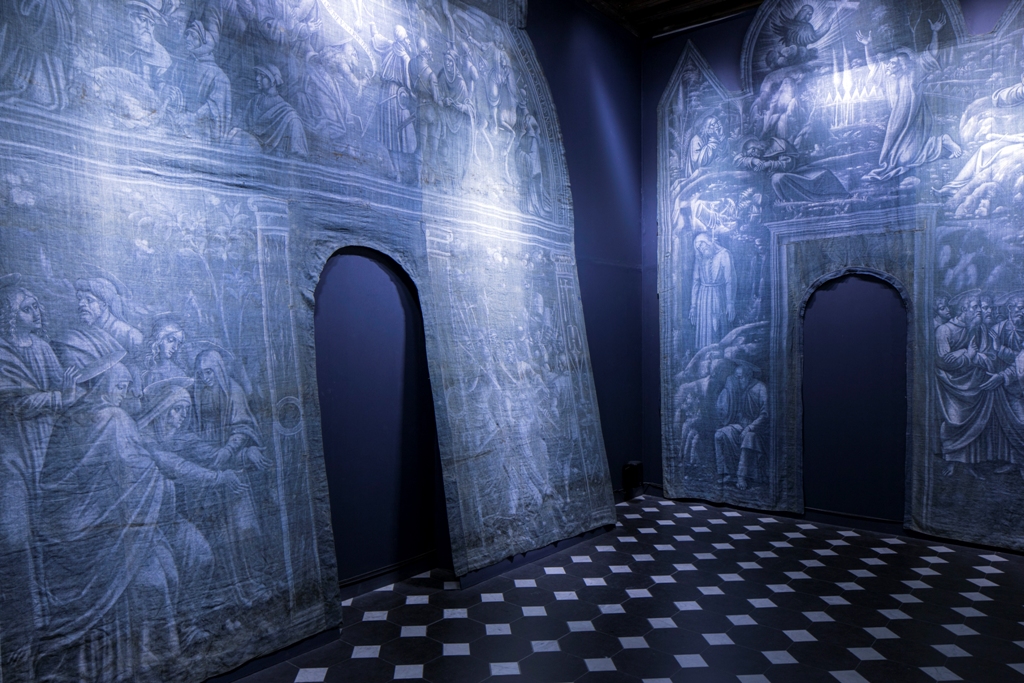
Cover photo: the Teli della Passione, Museo Diocesano di Genova.
You are probably wearing a piece of Genoese history right now. The word “jeans” comes from the name of our city, and the story behind it is one of the most surprising things you can discover on a visit to Genoa.
A sailors’ fabric
In the 16th century, Genoese trade records already mention a strong, hard-wearing cotton fabric, a kind of fustian, used for everyday work clothes. It was cheap, resistant and could be worn wet or dry, which made it perfect for life on ships and in the port. Sailors and dockworkers of Genoa wore it.
The fabric was exported far beyond Italy. English documents of 1576 already record “jean fustians” arriving in the port of Barnstaple, in Devon.
From “Gênes” to “jeans”
In French, Genoa is called Gênes. The blue cloth from the city became known as bleu de Gênes, “blue of Genoa”, and in English this turned into “jeans”. The name stayed with the fabric even when it was produced elsewhere.
Genoa and Nîmes: jeans and denim
Jeans have a French cousin. In the 17th century, weavers in the town of Nîmes, in southern France, tried to copy the Genoese fabric and created a similar cotton twill. It became known as serge de Nîmes, “from Nîmes”, which gave us the word denim.
So the two words most associated with blue trousers today tell the same story: a Genoese fabric and its French imitation.
Across the ocean: Levi Strauss
Centuries later, the fabric crossed the Atlantic. In 1873 Levi Strauss, a merchant in San Francisco, and the tailor Jacob Davis obtained a patent for work trousers reinforced with copper rivets. They were made in denim and sold to miners and workers. Those trousers became the blue jeans we know, and from the American West they conquered the world. Curiously, Levi Strauss called them “waist overalls” until 1960.
See 16th-century jeans in Genoa
The most extraordinary proof of this story is in Genoa’s Museo Diocesano, near the Cathedral of San Lorenzo, in Via Tommaso Reggio. Here you can see the Teli della Passione, a unique series of 14 large cloths dating back to the 16th century, around the 1540s.
They were made from indigo-dyed fabric and painted in white with scenes of the Passion of Christ, partly inspired by engravings by Albrecht Dürer. They come from the abbey of San Nicolò del Boschetto, in the Polcevera valley just west of Genoa, and were probably displayed during Lent, the season of the Passion. Looking at them, the blue background is unmistakable: it is the colour of jeans, painted more than 400 years ago.
Every year the city also celebrates its connection with denim during GenovaJeans, an event with exhibitions, designers and installations around the historic centre.
A tip for your visit
The Museo Diocesano is a short walk from the cathedral and from Palazzo Ducale, right in the middle of the old town. Check opening hours on the museum’s website before you go, then continue through the caruggi, the narrow alleys where sailors, merchants and dockworkers once lived and worked.
From the port to the table
The people who wore bleu de Gênes were the same people who shaped Genoese cooking: sailors who needed food that could survive long voyages, dockworkers who ate a slice of focaccia or farinata on the go, families who made the most of herbs and vegetables from tiny gardens on the hills. If you are curious about that side of the story, read how Genoa’s history ended up on the plate.
Or come and live it: in our hands-on cooking class in the centre of Genoa you can choose three recipes, from pesto and trofie to lasagna with pesto. Jeans recommended: an apron is provided.